
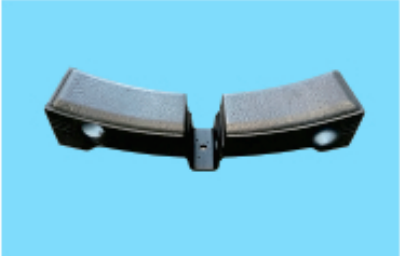
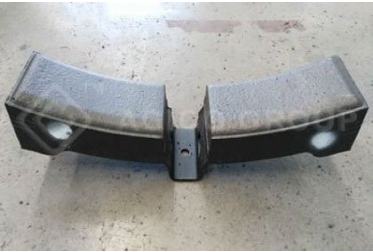
High-friction synthetic brake block–Chinese Standard
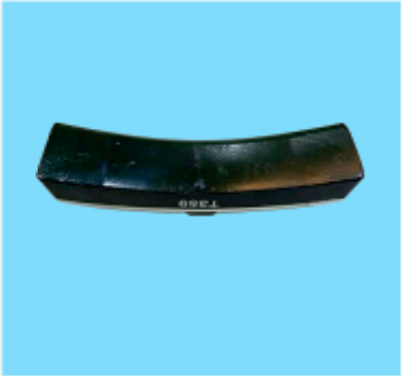
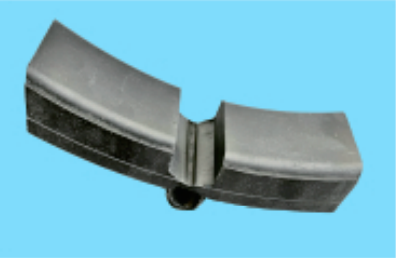
Chinese Standard High-Friction Composite Brake Block complies strictly with current railway industry standard TB/T 3104.1-2020 Brake Blocks for Rolling Stock – Part 1: Composite Brake Blocks, divided into two series: JH high-friction blocks for locomotives and LH heavy-duty high-friction blocks for freight wagons. It is designed for domestic freight wagons, diesel locomotives and heavy-load container trains with axle load from 21t to 30t and maximum operating speed up to 120km/h. The product is integrally hot-pressed with asbestos-free semi-metallic phenolic friction compound and stamped steel back, featuring stable dynamic friction coefficient of 0.35~0.45 and thermal fading rate ≤15% under dry, wet, extreme temperature and long downhill continuous braking conditions. It has passed full certification tests including dynamometer bench, line durability, low-temperature resistance and track circuit compatibility issued by China State Railway Group. With powerful braking force and short stopping distance calibrated for heavy-load brake rigging, it delivers core advantages of low wheel tread abrasion, braking noise reduction, asbestos-free eco-friendly formula and excellent resistance to humid tunnel corrosion. It serves as the standard brake block for domestic mainline heavy-haul freight trains and diesel locomotives, forming two matching systems of heavy-load high-friction and lightweight LL low-friction blocks under Chinese railway standards.
Specifications & Features
Product Description
1. Applicable Standard & Product Classification Scope
This high-friction composite brake block is manufactured in accordance with railway industry standard TB/T 3104.1-2020, replacing old versions TB/T 2403 and TB/T 3196, with supporting maintenance rules issued by China State Railway Group. It is mandatory for railway vehicle access inspection and divided into two mainstream high-friction sub-grades:
1. JH Series (Locomotive High-Friction Blocks): For diesel & electric locomotives, axle load 23~25t, max speed 120km/h;
2. LH Series (Heavy-Haul Freight High-Friction Blocks, LH1/LH3): Dedicated for ultra-heavy freight bogies with 27~30t axle load, applied on 10,000-ton heavy haul trunk lines such as Daqin and Haoji railways. Unified application limits:
· Brake mounting structure: Domestic standard single-side single block tread brake unit;
· Matching wheel: Standard φ840mm steel tread wheel with R450 tread radian;
· Applicable lines: National trunk freight lines, mountain long downhill routes with 40‰ gradient, humid underground tunnels and -40℃ extreme cold northern regions;
· System matching logic: High friction coefficient requires matched special high-friction brake rigging, cannot directly replace cast iron or LL low-friction blocks; brake cylinder and lever stroke need recalibration.
2. Structural & Domestic Heavy-Duty Semi-Metallic Material Composition
(1) High-Friction Friction Body
China railway certified asbestos-free modified phenolic resin semi-metallic composite matrix, reinforced with hybrid high-content steel, copper and basalt fibers, mixed with flake graphite solid lubricant, antimony sulfide and barite composite friction modifiers. Free of asbestos, lead, cadmium and other restricted hazardous substances, no carbonization or irritating toxic flue gas under continuous braking at 350℃. Dynamic friction coefficient stably ranges 0.35~0.45, friction fluctuation ≤±18% under all working conditions, thermal fading rate ≤15% after 10 consecutive emergency stops, complying with mandatory limits of TB/T 3104.1. Curved contact surface precisely fits R450 wheel tread radian for full uniform contact under heavy high-pressure braking, drastically reducing wheel tread thermal crack, metal embedding and local thermal scuffing risks. Gradient internal buffer micropores absorb massive braking impact load and eliminate high-frequency squeal noise during heavy emergency braking and wet rail operation. All edges are thickened and passivated to resist chipping, corner peeling and delamination under bumpy long-distance mountain freight operation.
(2) Steel Back Base
Stamped integrally from 4.5~6mm Q235 cold-rolled low-carbon steel plate. Multiple deepened trapezoidal anchor grooves are pressed on the inner side; friction compound deeply embeds into grooves during hot molding to reach mandatory national standard bonding shear strength ≥1.0MPa, preventing delamination and sheet peeling under long-term cold & hot cyclic and long downhill drag braking. Standard integrated buckle at the bottom perfectly fits domestic universal brake shoe holders for easy depot maintenance replacement. The steel back is equipped with metal wear warning boss: continuous sharp abnormal metal friction noise occurs when residual friction thickness reaches safety limit of 12mm to remind mandatory full block replacement, eliminating safety hazard of steel back grinding wheel tread. Phosphating anti-rust treatment is applied on steel back surface to resist high tunnel humidity and winter salt spray corrosion in northern China.
3. Mandatory Performance Requirements per TB/T 3104.1-2020
1. Friction Stability: Friction coefficient fluctuation ≤±18% under normal temperature, rain immersion, 40-minute full-load long downhill drag and -40℃ extreme cold environment, thermal fading rate ≤15% after consecutive emergency braking; passed special 40-minute full-load drag durability dynamometer test of China State Railway;
2. Extreme Thermal Resistance: Max continuous operating temperature 340℃, instantaneous peak temperature 440℃ under wheel lock emergency braking, no bubbling, carbonization, delamination or cracking failure;
3. Long-Term Wheel Protection: Wheel tread wear reduced by over 48% compared with traditional cast iron blocks; wheel-rail equivalent conicity strictly controlled, wheel profile inspection required every 25,000 km to avoid vehicle hunting instability risks;
4. Full Track Circuit Compatibility: Low-conductivity non-metallic composite formula generates no continuous conductive metal debris to interfere with domestic railway signal transmission, passing full railway signal compatibility inspection;
5. Moisture, Rust & Noise Control Performance: Phosphating anti-rust steel back adapts to high-humidity tunnels; braking noise decreased by 9~17dB(A) versus cast iron blocks, complying with national railway roadside noise control regulations; zero-asbestos eco-friendly formula with biodegradable braking dust and no persistent tunnel pollution;
6. Mechanical Safety Index: Friction body impact strength ≥2.8 kJ/m², room temperature compressive strength ≥75 MPa, 250℃ high-temperature compressive strength ≥58 MPa, no large-area fragmentation or shedding under emergency wheel lock, wheel-rail slipping and heavy impact conditions; water absorption & oil absorption rate ≤1.5%, minimal performance attenuation under humid environment.
4. Application Scope, Maintenance & Storage Rules
1. Applicable Rolling Stock: JH series for DF, HXD series diesel & electric locomotives; LH1/LH3 series for 27~30t axle load 10,000-ton heavy haul open wagons, hoppers and container freight trains;
2. Mandatory Replacement Standard: Full brake block replacement required when residual friction thickness ≤12mm; grinding, splicing and secondary reuse are strictly prohibited;
3. Running-in Operation Rule: Stable low-speed operation within the first 500km after installation, avoid frequent emergency braking to realize uniform fitting of friction surface; full-load long downhill continuous braking forbidden during running-in period;
4. Storage Condition: Store in dry & ventilated warehouse, avoid open-air rain soaking and long-term sunlight exposure, stacking height ≤10 layers, shelf life 18 months;
5. Mandatory Inspection Cycle: Wheel equivalent conicity inspection every 25,000 km during routine operation, simultaneously check friction layer cracking, partial uneven wear and chipping defects; sample friction performance inspection required in vehicle depots every year.
5. Core Differences Between Chinese High-Friction & Domestic LL Low-Friction Brake Blocks
1. Friction Coefficient: High-friction grade 0.35~0.45; LL low-friction grade only 0.13~0.17;
2. Brake Rigging Matching: High-friction blocks need matched special high-friction brake levers, cannot directly replace cast iron blocks; LL low-friction blocks realize 1:1 drop-in replacement without brake system modification;
3. Max Axle Load Capacity: LH high-friction series supports up to 30t ultra-heavy axle load; LL low-friction max limit 25t;
4. Application Scenario: High-friction blocks for 10,000-ton heavy haul lines and high-power locomotive braking; LL low-friction blocks for ordinary medium-light freight and urban rail vehicles;
5. Thermal Stability: High-friction grade max continuous working temperature 340℃ with superior long downhill heavy-load durability; LL low-friction max 330℃.
Customer Reviews
No customer reviews yet.
Send an Inquiry
Interested in High-friction synthetic brake block–Chinese Standard? Leave your contact details and message — our export team replies within 24 hours.