
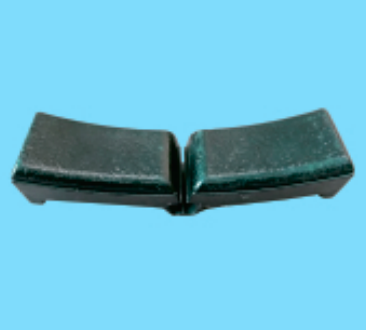
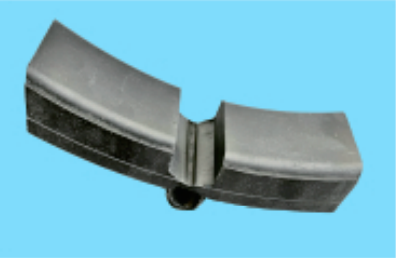
CT-I metro brake block
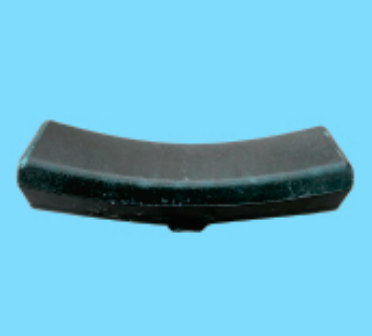
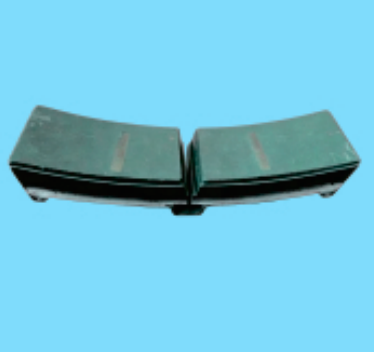
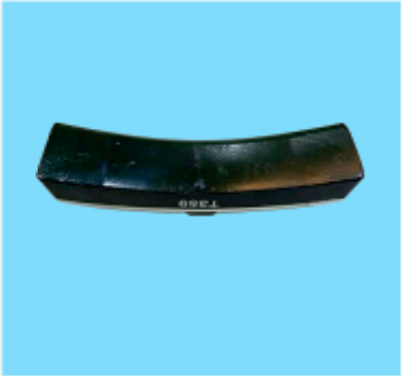
CT-I metro brake block is the basic entry-level asbestos-free low-friction composite tread brake shoe of CT series, fully compliant with urban rail transit standard T/CAMET 04004.10. It is designed for early standard Type B metro vehicles and low-speed suburban light rails, matching φ840mm wheels with R420 tread radian, maximum operating speed 70km/h. It is integrally hot-molded with curved friction body and stamped Q235 steel back; an elastic buffer slot is opened in the middle of friction body to deliver superior anti-fracture performance compared with solid-surface brake blocks. The stable dynamic friction coefficient ranges 0.24~0.34 with minor thermal fading under dry, wet and low-temperature conditions, featuring low braking noise and minimal wheel tread abrasion. The standardized single buckle at bottom fits original CT-series brake shoe holders, with low operation & maintenance cost, widely applied to short-distance urban transit and airport shuttle lines with light load and low-frequency braking.
Specifications & Features
Product Description
1. Applicable Standard & Product Positioning Scope
CT-I is the original basic composite brake block of CT series, manufactured in accordance with group standard T/CAMET 04004.10 Urban Rail Transit Vehicle Brake System Part 10: Composite Brake Blocks, targeting light-load scenarios including early lightweight Type B metro vehicles, airport light rails and campus trams in China. Exclusive application limits:
· Brake mounting structure: Original CT-series single-buckle brake shoe holder, single-side tread brake unit;
· Applicable Rolling Stock: Early 6-car Type B metro trains, suburban light rail with max speed 70km/h;
· Maximum allowable axle load: 14 tons for light commuter service;
· Matching Wheel: φ840mm steel tread wheel with R420 tread radian;
· Applicable Lines: Short-distance viaducts, underground tunnels, gentle-gradient routes without long continuous downhill heavy-load braking;
· Series Grade Differentiation: CT-I = basic light-load grade; CT-II = universal standard grade for Type B metro; CT-E = heavy-duty grade for high-passenger Type A metro.
2. Structural & Material Composition
(1) Slotted Elastic Friction Body
Asbestos-free aramid-mineral fiber organic composite matrix with modified phenolic resin binder, mixed with graphite and antimony sulfide friction modifiers. Free of asbestos and heavy metals, no toxic flue gas released under high-temperature braking. Different from solid structure of CT-II & CT-E, a through buffer slot is machined on the horizontal middle line of CT-I friction body to improve overall elasticity, strongly absorb braking impact and reduce cracking & chipping risks. Curved contact surface precisely fits R420 wheel tread radian to eliminate sharp squeal during low-speed station arrival and rainy operation. All edges are thickened and passivated to balance wear resistance under frequent start-stop short-distance service. Stable dynamic friction coefficient ranges 0.24~0.34 with overall fluctuation ≤±16%, no obvious cold fading at -25℃, maximum continuous working temperature up to 310℃.
(2) Stamped Steel Back Base
Integrally stamped from 4mm thin Q235 cold-rolled low-carbon steel plate, designed for light-load braking pressure. Multiple trapezoidal anchor grooves are pressed on inner side; friction compound deeply embeds into grooves during hot molding to meet urban rail bonding strength standard, preventing delamination and degumming under long-term cold & hot cycles. Phosphating anti-rust treatment is applied on steel back surface to resist tunnel high humidity. Integrated single positioning buckle at bottom perfectly fits original CT brake shoe holders for easy maintenance replacement. The steel back is equipped with wear warning boss: continuous metal friction noise occurs when residual friction thickness reaches 10mm to remind mandatory full block replacement and avoid wheel tread scratch damage.
3. Core Product Advantages
1. Anti-Crack Elastic Structure: Middle buffer slot absorbs braking impact, cutting friction body cracking failure rate by 60% compared with solid brake blocks;
2. Low-Speed Silent Braking: Dual noise reduction via fiber composite and slotted buffer, braking noise reduced by 10~16dB(A) versus cast iron blocks during low-speed station approach;
3. Mild Low-Friction Wheel Protection: Moderate hardness friction material reduces wheel tread abrasion by over 55% under light load, extending wheel reprofiling intervals;
4. Stable Wide-Temperature Performance: Consistent friction coefficient from -25℃ to 310℃, reliable service in northern frigid winters and southern humid tunnels;
5. Eco-Friendly Safety: Zero-asbestos formula, biodegradable braking dust complying with underground tunnel environmental control requirements;
6. Low Operation & Maintenance Cost: Lightweight raw material with lower single block weight, service mileage up to 50,000km and strong accessory compatibility.
4. Maintenance, Storage & Replacement Rules
1. Mandatory Replacement Standard: Full block replacement required when residual friction thickness ≤10mm; grinding and secondary reuse are prohibited;
2. Running-In Rule: Avoid frequent emergency braking within the first 300km after installation to realize uniform friction surface fitting;
3. Storage Condition: Store in dry & ventilated warehouse, stacking height ≤10 layers, avoid sunlight exposure and rain soaking, shelf life 18 months;
4. Inspection Cycle: Check friction layer cracking and uneven wear every 25,000 km, simultaneously inspect wheel tread condition.
5. Core Differences Between CT-I, CT-II and CT-E Brake Blocks
1. Load Capacity: CT-I max axle load 14t (light load); CT-II 16t standard; CT-E 18t heavy load for Type A vehicles;
2. Structural Design: CT-I friction body with buffer slot; CT-II & CT-E solid integral friction body;
3. Max Thermal Resistance: CT-I 310℃; CT-II 320℃; CT-E 350℃;
4. Maximum Operating Speed: CT-I ≤70km/h; CT-II ≤80km/h; CT-E ≤80km/h for high-density heavy passenger flow;
5. Application Scenario: CT-I for early light-load light rail & short-distance metro; CT-II for mainstream standard Type B metro; CT-E for high-capacity Type A metro.
Customer Reviews
No customer reviews yet.
Send an Inquiry
Interested in CT-I metro brake block? Leave your contact details and message — our export team replies within 24 hours.